

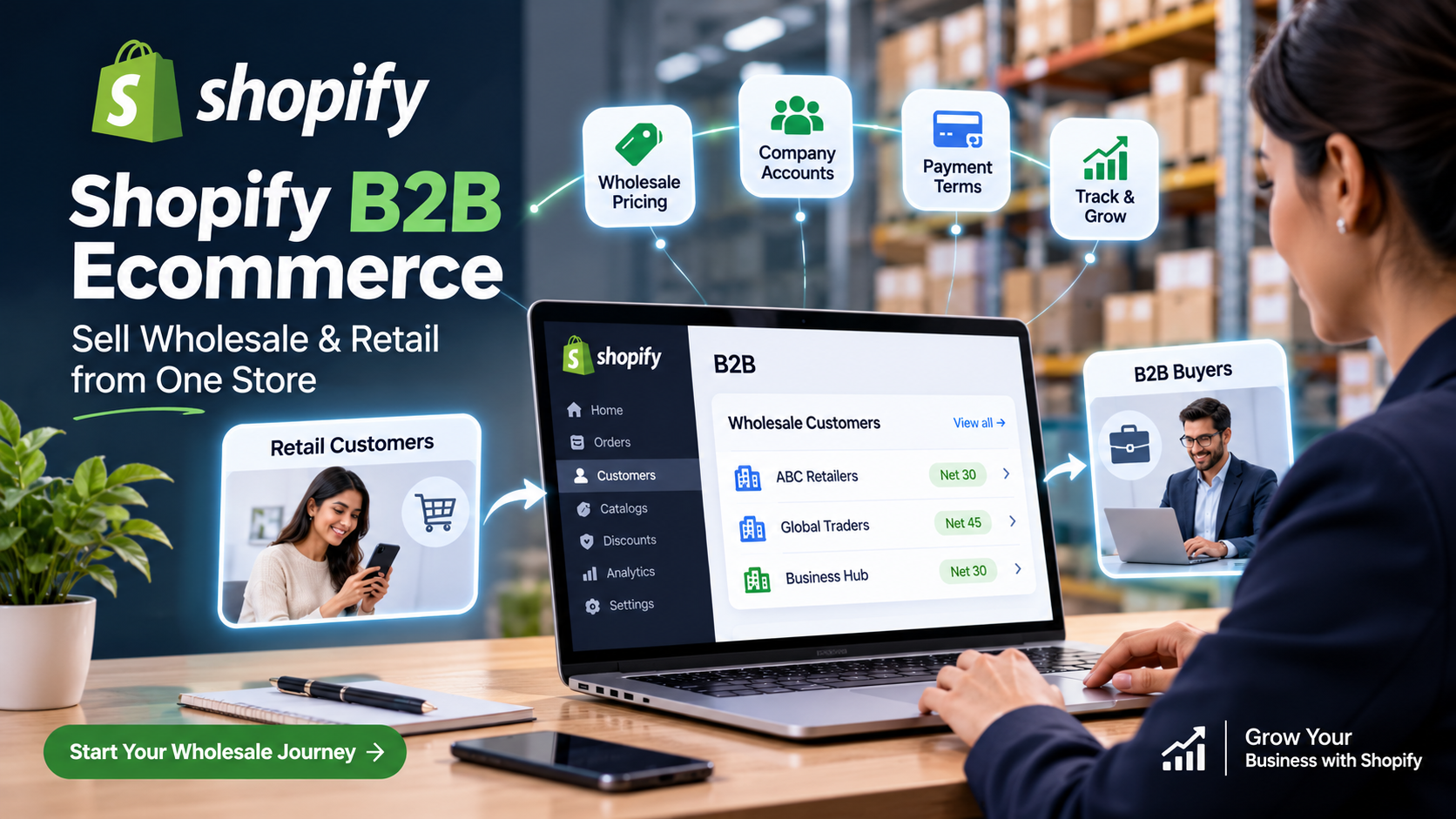
Shopify B2B Ecommerce: How to Build and Manage a Wholesale Online Store
Selling to other businesses used to mean spreadsheets, email chains and a separate wholesale portal that nobody enjoyed maintaining. Today, Shopify B2B ecommerce lets you run wholesale and retail from one admin, with business buyers logging in to see their own prices, order rules and payment terms. Since April 2026 these tools are included on every paid Shopify plan, so you no longer need Plus just to get started. This guide walks you through what is available, how to build your wholesale store step by step, and how to manage it once orders begin to arrive.
Why Shopify B2B Ecommerce Makes Sense for Wholesale
Business buyers want the same easy ordering they enjoy as shoppers, but with trade pricing, bulk quantities and invoicing on credit. Running both channels in one store means a single product catalog, one inventory count, one set of reports and one team to train. You avoid the cost of a second platform and keep your brand consistent whether the customer is a shopper or a retailer.
What You Get on Each Plan
On Basic, Grow and Advanced, you can create company profiles, apply volume pricing and quantity rules, offer payment terms, accept vaulted cards and take PO numbers at checkout. The main limit is that you can run up to three active B2B catalogs, and these are attached through Shopify Markets. Plus removes that cap, lets you assign a catalog straight to a company or location, and adds deposits and partial payments. The good news is that you can begin on your current plan and move up later without rebuilding anything.
How to Build Your Wholesale Store
Follow this simple path to go live:
1. Decide on your plan and market setup
Check how many customer groups you expect. If three catalogs cover your price tiers, a standard plan is enough. If every buyer needs a negotiated price list, Plus will save you time.
2. Set wholesale prices and quantity rules
Prices can be a fixed amount, a percentage off retail, or imported by CSV. Add minimum orders, maximums and multiples, such as selling only in cases of 12. Volume breaks reward larger orders automatically.
3. Build your catalogs
A catalog defines which products a buyer can see and what they pay. Keep catalogs from overlapping on the same product, because when two apply, the lower price wins.
4. Create company profiles
In the admin, open Customers and then Companies. Each company can hold several locations and several buyers, and each buyer can be given order-only or full access. Tax exemptions can be set per company as well.
5. Choose payment terms
Terms range from Net 7 through Net 90, or due on receipt or fulfillment. Grant longer terms only to buyers you trust, and use Shopify Flow to send reminders as due dates approach.
6. Launch and track
Invite your first buyers, test the checkout yourself, and watch which products reorder most.
How Companies, Catalogs and Terms Fit Together
Managing Your Wholesale Store Day to Day
Once buyers are inside, the work shifts to keeping things smooth. Here is the typical life of a wholesale order:
A few habits keep it running well:
- Use draft orders for custom quotes, then send an invoice the buyer can pay online.
- Let buyers reorder their usual items in a few clicks, which is where most repeat revenue comes from.
- Review payment terms regularly and tighten them for buyers who pay late.
- Offer cards or ACH where available, since faster payment improves your cash flow.
- Watch your catalog count as you grow, and plan the move to Plus before it becomes a bottleneck.
Common Mistakes to Avoid in Shopify B2B Ecommerce
Many merchants create too many price tiers too early, leave wholesale prices visible to retail shoppers, or forget minimum order quantities, which makes small orders unprofitable. Start simple, test with two or three friendly buyers, and expand once the process feels solid.
Final Thoughts
Shopify B2B ecommerce is now within reach for almost any merchant. You can open a wholesale channel on the plan you already pay for, give buyers a modern self-service experience, and scale into more advanced features when your volume justifies it. Start with one catalog and a handful of trusted companies, and let real orders guide what you build next.